
Agentic Workflows Make It Easier to Collect Monkeys
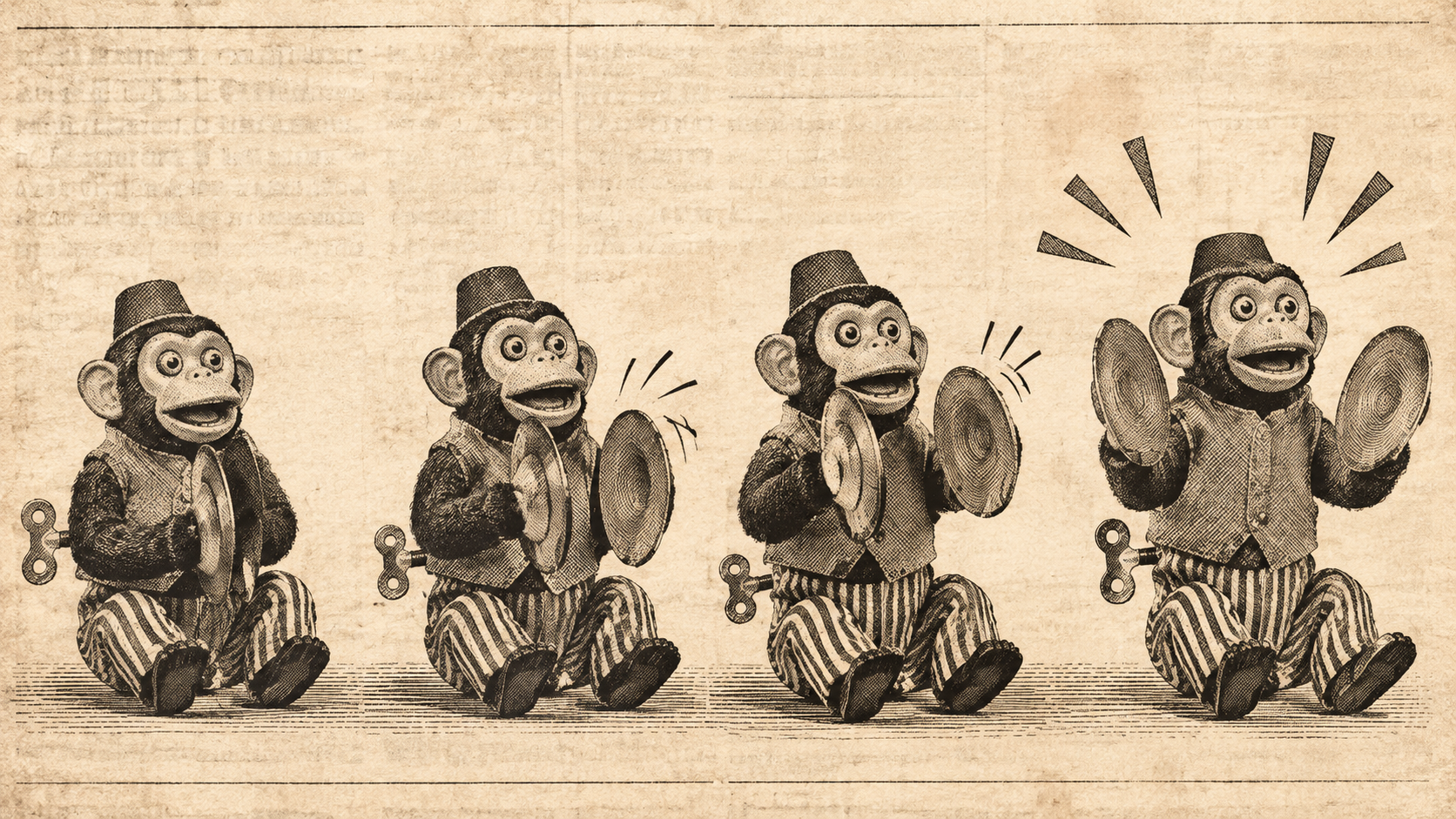
The monkey is the next move on a problem. A report comes to you with a problem, you say some version of "let me think about it and get back to you", and the monkey jumps from their back to yours. Now they are waiting on you. Do that a dozen times a week and you become the bottleneck for your own team, working late on everyone else's next move while they sit and wait.
One of my favourite management articles is almost fifty years old, and it is about monkeys.
William Oncken, Jr. and Donald L. Wass published "Management Time: Who's Got the Monkey?" in the Harvard Business Review in November 1974. HBR reprinted it as a Classic in 1999, and it is still one of the two best-selling reprints the magazine has ever sold.
I love it because it is so simple. It describes something that happens to every manager, every day, and that most of us had no name for until we read it.
Once you have the name, you see it everywhere. Recently I saw it on my own back.
I am supposed to publish one of these every two weeks. This one is late, because last month was chaos: holidays, people on leave, half the calendar gone. Somewhere in it, I picked up a pile of monkeys without noticing.
Two examples, out of many. Our pull request reviews are almost entirely automated now. An agent reviews the change and flags what it finds, and a human gives the final OK. Infrastructure works the same way. An agent produces a weekly report on our AWS usage and recommends where we need more resources, and someone has to read it and approve the spend.
Both of those final OKs belong to the heads of the departments concerned. Before going on leave, they handed them to colleagues, with specific instructions. Then the colleagues came to me. Maybe the instructions were not as clear as they looked, or maybe nobody wanted to be the one who said yes.
The last quarter is always busy for me, so I said the line Oncken wrote about fifty years ago: "Let me look into it and get back to you." I said it so I could get back to whatever I was doing at that moment.
Honestly, it did not feel like taking anything. In my head, the agents had already done most of the work, and all that was left was a yes. I did not notice how many of those "yeses" I had collected until I sat down to write a different article, the one I had planned for this slot, and found the month was gone.
That was when Oncken's monkeys came back to me. So this is the article instead.
In 1974, a manager who took too many monkeys felt it quickly. Each one cost real hours, the evenings filled up, and sooner or later something had to be handed back. I did not feel it. With the agents doing most of the work, each monkey looked like minutes, so I kept saying yes. They were not minutes. Pull requests piled up waiting for my OK, and the developers and the QA pipeline behind them waited too. Requests from other teams sat in the same queue. My own weekend work slipped, and so did this article. I had become exactly the bottleneck Oncken described, and I was the last to know.
And the final OK is not a small thing. In both processes, it is the only step left that needs judgment, and each department head had deliberately handed it to a colleague. With one question, it skipped past the colleague and landed on me.
That monkey moved backs exactly the way Oncken described. What changed is how cheap it looked when I took it.
Done is not decided
Look at what the agents actually took off the table. They reviewed the code. They read the usage data and wrote up a recommendation. That is real work, and they do it well.
What they did not take is the yes. Approving a pull request means deciding the change is safe to ship. Approving more AWS resources means deciding the spend is justified. Both need someone who understands the context, knows what is at stake, and is willing to own the answer. That is judgment, and judgment is exactly the part an agent hands back.
So the monkey left over after the agent is done is smaller in volume and heavier in kind. It is the one piece that cannot be automated. And because everything around it is finished and formatted, it looks like the easiest part of the job. "The agents have done most of the work" is true of the work. It is not true of the decision.
The warning is gone.
Oncken gave managers five rules for the care and feeding of monkeys. The second is this:
"The monkey population should be kept below the maximum number the manager has time to feed."
The rule assumes the manager runs out of time, and in 1974 the manager was the first to know. Every monkey cost an evening. A manager who took too many felt it in their own week, long before the team did, and the only way out was to hand monkeys back. The calendar was doing two jobs at once. It was the limit, and it was the warning.
Agents broke the second job without touching the first. The limit is still there. Every yes still needs time and attention, and a person only has so much of both. What has gone is the feeling of getting close to it. When every monkey looks like minutes, you do not feel the pile growing. You hit the limit without noticing, and the first people to feel it are the ones waiting on you.
That is what happened to me. My calendar never looked overloaded. Other people's queues let me know that I was overloaded.
Oncken did not predict any of this, and I am not claiming he did. The point is narrower: his rules relied on the manager feeling the cost first, and that is no longer guaranteed.
The developmental cost
Oncken's real argument was never about the manager's calendar. The calendar was the symptom. The pull quote in the original is this:
"In accepting the monkey, the manager has voluntarily assumed a position subordinate to his subordinate."
The manager is now working for the report. And the report, relieved of the monkey, is relieved of the struggle that would have taught them to handle it. Every monkey a manager takes is a lesson the report does not get.
In my case, the lesson was the decision itself. The department heads had chosen to hand it to their colleagues, with instructions to lean on. Whether or not anyone called it that, it was a chance for those colleagues to make a call that is normally above them. When I said I would get back to them, I took that chance away. They never made the call, and the next time it comes up, they will not feel any more ready to.
I wrote about the individual version of this in Cognitive Atrophy: The Hidden Cost of AI in Engineering Teams. That piece was about what happens to a person who stops doing the hard part of their own work. This is the same thing at the level of a team, and the person causing it is the one who is supposed to be building the team up.
There is an honest objection here, and Stephen Covey raised it in his commentary on the 1999 reprint. Bosses cannot simply give monkeys back. A manager who refuses every problem brought to them is not developing anyone, just abandoning them. I agree. The answer is not to refuse the monkey. It is to agree, out loud, whose back it lives on and what the next move is, which is where the rest of Oncken's article becomes unexpectedly practical.
Somebody wrote the agent autonomy spec in 1974
Oncken describes five degrees of initiative a person can exercise on a problem. In his words:
- "wait until told (lowest initiative)"
- "ask what to do"
- "recommend, then take resulting action"
- "act, but advise at once"
- "act on own, then routinely report (highest initiative)"
Every agent autonomy debate happening right now is a rediscovery of this ladder. It maps almost directly onto how agents get configured:
| Level | Oncken | Agent configuration |
|---|---|---|
| 1 | Wait until told | Manual trigger only. No schedule, no autonomy. |
| 2 | Ask what to do | Agent proposes options. A human picks one before anything runs. |
| 3 | Recommend, then take resulting action | Agent recommends and executes on approval. The approval gate is the control. |
| 4 | Act, but advise at once | Agent acts and notifies immediately. Only safe where the action is reversible and someone actually reads the alert. |
| 5 | Act on own, then routinely report | Agent acts and reports on a cycle. Only defensible where the blast radius is genuinely small. |
Both of my monkeys were meant to sit at level 3. The agent did the work and a human approval was the control. The department heads delegated that control with instructions. The colleagues came back to me at level 2, asking what to do. By promising to get back to them, I pushed them down to level 1: wait until told.
Oncken told managers to outlaw levels 1 and 2 for their people. A report who waits to be told, or who only ever asks what to do, is handing the monkey straight back. He wanted completed staff work.
Agents get pushed the other way. They are built to save time, and an agent that waits for permission saves less time than one that does not, so the pressure on their permissions all runs upwards. Left alone, agents drift towards level 5, and the manager's job is to argue them back down.
What I had not noticed until last month is that the people around the agents can drift in the opposite direction. The agents stayed at level 3. The humans who were meant to give the approval slid to level 2, and then to level 1. The automated part of the process held its position. The human part quietly gave up its initiative.
What I would do differently
The fix is Oncken's, unchanged. It just matters more now that the warning is gone. I've turned it into a check I run at the moment it matters, which is just before I say "let me get back to you."
The Monkey Check
- Whose back? If the decision was delegated, it stays with the person it was delegated to. The answer to "should I go ahead?" is "what do you recommend?", not "let me look into it."
- What level? Agree the degree of initiative out loud. "Here is how to decide" still invites the question. "You decide, and tell me afterwards" does not. For a pull request with an agent review behind it, or a resource request with a weekly report behind it, that is level 4, and it is often enough.
- When's the next feeding? Oncken's rule: "Every monkey should have an assigned next feeding time and degree of initiative." If I take it, it gets a date. If I won't, I say so straight away and hand it back. In his shorter words: "Monkeys should be fed or shot."
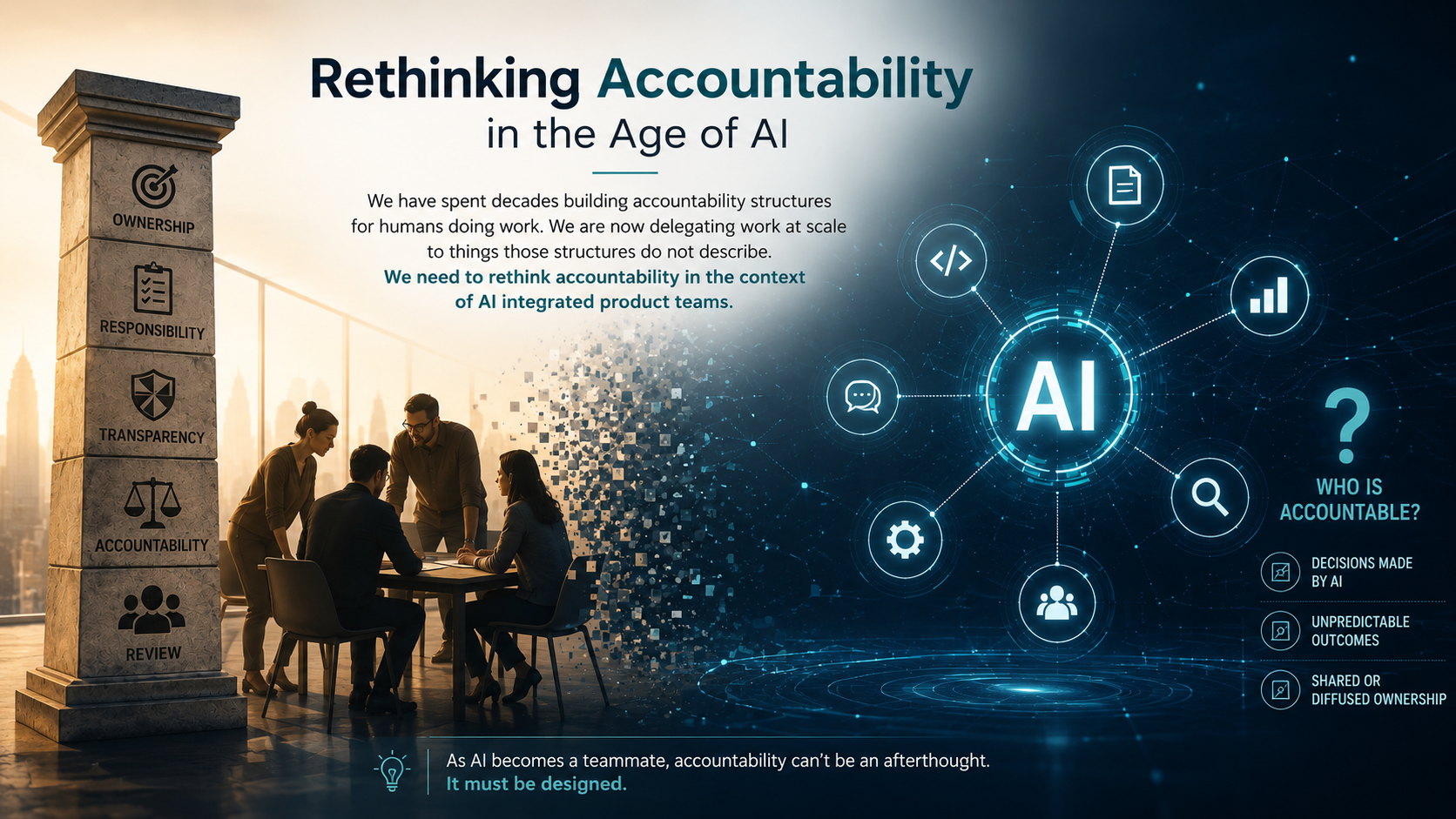
The same rules apply to the agents themselves. An agent with no scheduled review and no agreed degree of initiative is a monkey nobody is feeding and nobody has shot. I wrote about where that ends up in https://www.antequity.net/blog/accountability-in-AI-integrated-product-teams.
Which yes did you take this week because it looked cheap, and who is waiting on it?