


Aligning Business Vision & Goals to Define a Strategy for Performance-Based SDLC
The modern software industry is undergoing a fundamental transformation due to AI, market shifts, and rapid technological advancements. To stay competitive, software organisations need structured frameworks that align software development lifecycles (SDLC) with business vision and goals. This alignment ensures that engineering teams are not just writing code but contributing directly to financial, innovation, and cultural objectives.
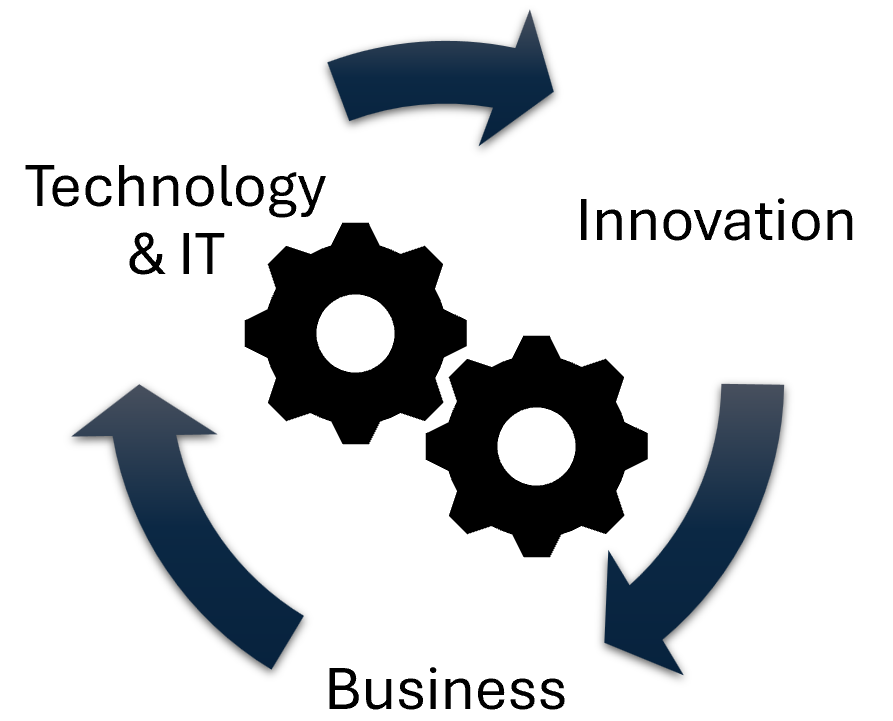 This article explores a Performance-Based SDLC approach, incorporating proven frameworks used in the industry to ensure that development efforts are measurable, goal-oriented, and business-aligned.
A simple search online will give you a long list of industry-standard metrics such as cycle time, lead time, deployment frequency, MTTR, DORA metrics, and so on. There’s plenty of content explaining what these metrics mean.
What’s surprisingly rare, though, is thoughtful discussion around:
- How to actually implement systems that capture these metrics effectively
- Whether these metrics are even relevant to your context
- And most importantly, why you should care about some metrics more than others
This is not an accident. It’s because the real answers are nuanced. Only you as a leader have a deep understanding of what your organisation is truly trying to achieve and what keeps your teams up at night. The value of any metric is only as strong as its alignment with those goals and anxieties of your team.
Before we get into the details, I have listed below the plethora of metrics available that can help measure various aspects of a software engineering team.
| Productivity & Efficiency | Quality and Stability | Team well-being | Business Impact |
|---|---|---|---|
| Cycle Time | Defect Density | Employee Satisfaction | Customer Satisfaction |
| Lead Time for Changes | Test Coverage | Collaboration Metrics | Feature Usage |
| Story Velocity | Code Review Metrics | Knowledge Sharing | Time to Market |
| Deployment Frequency | Code Churn | On-Call load | System Uptime/Availability |
| Work in Progress | Code Complexity | Rate of scope changes | Incident Frequency |
| Sprint Burndown | Maintainability Index | Resource Utilization | |
| Release Burndown | |||
| Change failure rate | |||
| Mean-Time to Recovery (MTTR) | |||
| Pull Request (PR) Size | |||
| Review Time |
Table 1: Common Categories Of Performance Metrics
It's like standing at a subway store with all the toppings that you could wish for in your sandwich and probably your own secret sauce, but if you are like me who feels every extra topping a dagger through your wallet or unless you have bread which is large enough to sustain all the toppings, the problem is of choice.
How do you make the best of a situation given your resources and constraints?
Defining Business Goals Before Metrics
Before selecting performance metrics, organisations must define clear business objectives. Goals can vary widely depending on the company's stage, market position, and vision. Your goals must be something specific and measurable. In a future post, we’ll dive into how to craft effective goals and avoid common pitfalls. For now, here are a few examples that highlight the difference between well-defined and poorly defined business objectives:
| Business Function | Well-Defined Goals | Poorly Defined Goals |
|---|---|---|
| Financial | Grow sales by X% over the next quarter | "Grow revenue this year" — but by how much, and is one year the correct time frame? |
| Increase operating profit margin by X% | ||
| Improve net cash flow by boosting monthly recurring revenue (MRR) by X% | ||
| Innovation | Reduce time-to-market for new features from 3 months to 1.5 months | "Improve data quality" — for what purpose, and how will you know when it’s better? |
| Improve data quality to support ML integration for faster analysis | ||
| Decrease incident response time by X hours | ||
| Cultural | Create internal Wikis to improve documentation for remote teams | "Improve employee retention" — without identifying the root cause |
| Reduce internal team response time by 50% | "Improve team’s technical capabilities" — how will improvement be measured? | |
| Decrease junior employee workload from 110% to 90%, without impacting team velocity |
Table 2: Example of Business Goals
Without a well-defined goal, measuring development performance can become arbitrary and ineffective. A well-defined goal serves as a north star for your teams and helps you identify the right KPIs for your team. Vague goals, on the other hand, leave too much open to interpretation and therefore measuring performance can become arbitrary which ultimately can do more harm than good.
Choosing the Right Framework for Alignment
Once business objectives are clear, selecting the right framework ensures team alignment with the organisation's strategic direction. Below are key frameworks that are industry standards and used by global tech giants:
DORA Metrics
DORA (DevOps Research & Assessment) metrics provide quantifiable software delivery performance indicators:
- Deployment Frequency – How often new code is deployed.
- Lead Time for Changes – Time from code commit to production.
- Change Failure Rate – Percentage of failed deployments.
- Mean Time to Restore (MTTR) – Time to recover from incidents.
These metrics help track efficiency, resilience, and speed in development pipelines.
SPACE Framework
The SPACE framework moves beyond code output and considers developer well-being and collaboration:
- Satisfaction & Well-being (Is the team engaged and motivated?)
- Performance (Are we achieving key business goals?)
- Activity (Are engineers producing meaningful work?)
- Collaboration & Communication (How effective is teamwork?)
- Efficiency & Flow (Is development progressing smoothly?)
North Star Metrics
A single, high-impact North Star Metric aligns all teams toward a shared outcome. Example:
- GitHub: "Increase developer engagement in repositories."
- Microsoft Azure: "Maximize cloud workload adoption."
- AI SaaS Product: "Increase model inference speed by 30%."
Why it works: Provides clear, measurable direction for the entire organisation.
While each of these is a complete framework on its own, real-world software operations are rarely that simple.
In my experience, I've almost never worked in an organisation or with a client whose operations could be effectively managed using just one framework in isolation. organisations are complex, messy, and constantly evolving. A single lens often isn't enough.
What usually works best is a blend, i.e, taking the best elements from multiple frameworks and tailoring them to the unique context, maturity, and goals of the organisation. Factors like team structure, technical debt, business model, regulatory requirements, and culture all influence which pieces of which frameworks are relevant.
Frameworks must be thought of as tools rather than a strict rule-book. Leadership skill lies in knowing when and how to use each tool.
Conclusion
A Performance-Based SDLC isn’t about obsessing over every metric, but about choosing the right ones that truly reflect your organisation’s goals, team context, and strategic priorities. Measuring performance in software development is one of the most contentious and difficult things to do, unlike measuring success of sales, procurement, or talent acquisition teams. It is even more difficult considering the impact that organisational culture has on team productivity and output.
While frameworks like DORA, SPACE, and North Star Metrics offer powerful lenses to evaluate performance, the real art lies in thoughtful adaptation. No single framework will fit every organisation out of the box. Successful leaders tailor, combine, and evolve these frameworks as the business grows and matures.
In our next article, we’ll take this discussion further by exploring how to differentiate KPIs from OKRs, why development performance should never be evaluated in a vacuum, and Finally how to draft an actual model that can be used to measure performance.
The goal isn’t to measure more.it’s to measure better.